How to Test a Side Hustle Idea Before Spending Money
“How do I know if this is worth spending money on?”
That's a useful question to ask before the domain, supplies, equipment, website, packaging, or software start adding up.
You probably won't know whether a side hustle will work before you've tried it.
But you can find out whether it has earned the next investment.
Many side-hustle ideas can be tested before you make any significant investment. And when some money is necessary to test the idea properly, the goal is to spend the smallest reasonable amount needed to learn something useful.
You're not trying to prove the whole business. You're trying to get enough evidence to decide what deserves your next dollar.
Start with the smallest real version
A vague idea is hard to test.
“I might start a baking side hustle” doesn't give anyone much to respond to.
Neither does:
“I've been thinking about doing some freelance admin work.”
Make the idea concrete enough that another person could actually react to it.
For example:
“I'm taking orders for a dozen custom decorated cookies for local birthday parties next weekend for $30.”
Or:
“I'm offering a five-hour admin package for a local business that needs help organizing its client follow-ups.”
Now there's something to test.
Look for behaviour, not compliments
This is where early testing can become misleading.
People are often happy to tell you:
“That sounds great.”
“You should totally do that.”
“I'd probably buy something like that.”
Those reactions can be encouraging, but they don't tell you much about whether someone will actually act.
A better test asks a potential customer to respond to something specific.
That could mean asking whether they'd book the service, take one of a limited number of pilot spots, place an order, join a short waitlist for a defined offer, or, when appropriate, put down a deposit or make a purchase.
The closer the response gets to an actual commitment, the stronger the evidence becomes.
One person's response still doesn't prove the idea will succeed.
It gives you information you didn't have before.
Test before you build the finished version
Suppose you're considering selling handmade candles.
You don't need to order enough jars, labels, and supplies for 100 candles just to find out whether anyone is interested.
You might create a few samples first, show the actual product to potential buyers, and see whether anyone wants to order one.
Or suppose you're considering offering home-organizing help.
You don't need a full website, elaborate packages, and branded worksheets to test the idea.
You could define one organizing session clearly enough to offer it to a few people who plausibly need that help.
The test should resemble the real thing closely enough that the response means something.
It doesn't need to resemble the finished business.
Sometimes the test costs a little money
“Test before spending” shouldn't become another rigid rule.
Some ideas can't be tested meaningfully without spending anything.
A photographer may need equipment she already owns or access to something she doesn't. Someone selling a physical product may need to make a sample. A maker may need materials. A local service might require a tool or supply before the first job can happen.
That's okay.
The question becomes:
What's the smallest reasonable investment that lets me test the assumption I'm actually unsure about?
If you're wondering whether people want your handmade product, you probably don't need inventory for 50.
You need enough to show or sell a credible first version.
If you're wondering whether someone will pay for your service, buying a premium website template probably doesn't help answer that question at all.
That's the distinction.
Watch what the test actually tells you
A test can give you several different answers.
Someone may want the offer but hesitate at the price.
They may like the general idea but want a different version.
They may misunderstand what you're offering.
They may say no.
They may buy immediately.
None of those responses automatically tells you what will happen with the entire business.
You're looking for clues.
One no doesn't kill an idea.
One yes doesn't prove it.
But several real reactions can start showing you what needs another test, what needs changing, and what may deserve more investment.
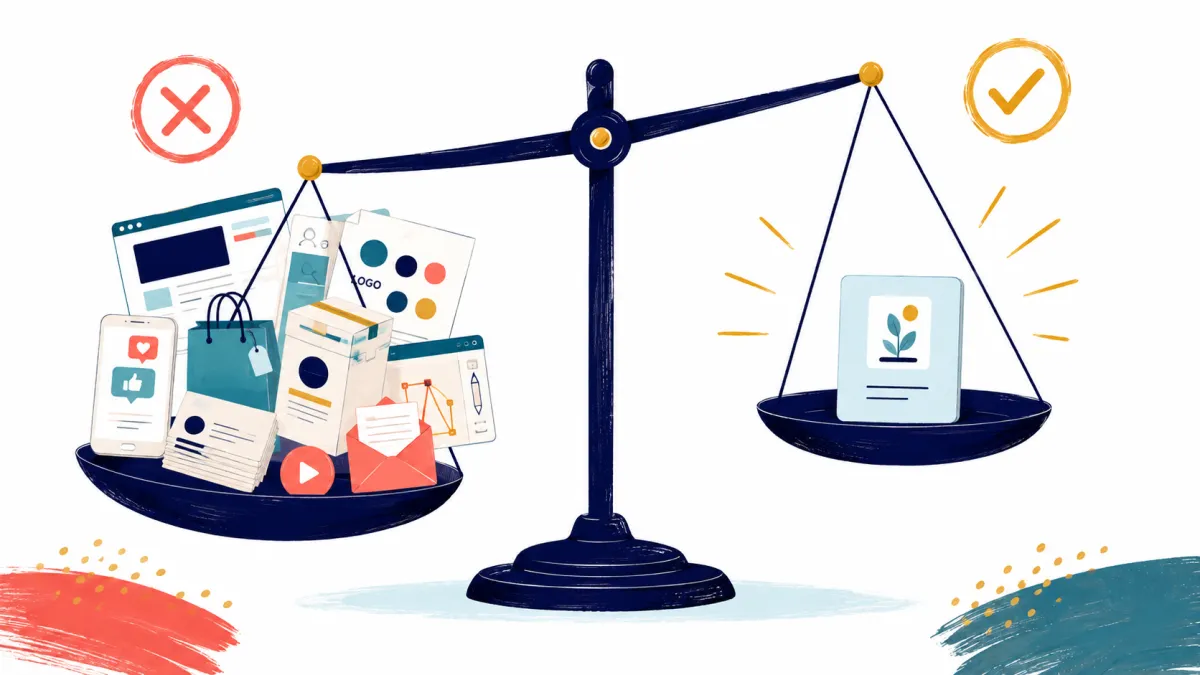
The spending trap
Early spending is tempting because it looks and feels like progress.
You can buy a domain.
Design a logo.
Order business cards.
Subscribe to software.
Buy packaging.
Spend a weekend building a website.
At the end, you have things you can see.
Talking to potential buyers feels much less substantial.
But if the biggest uncertainty is whether somebody actually wants the offer, branding doesn't answer it.
A real-world test does.
That's why the order matters.
Don't ask:
“What does this side hustle need before I can launch it properly?”
Ask:
“What do I need to find out next, and what's the cheapest credible way to find it out?”
That question can save you a lot of unnecessary building.
Let each piece of evidence earn the next step
Your first test isn't supposed to decide whether you should devote the next five years to the idea.
It may only tell you:
Someone understood the offer.
Someone wanted it.
Someone wouldn't pay that price.
Someone bought it.
Someone used it and wanted something different.
Good.
Now you know something.
Your next move can come from that information instead of another round of guessing.
Spending money doesn't make an idea more real. Evidence does.
If your idea is still too vague to test
Then testing isn't quite your next step yet.
Read How to Turn a Rough Idea Into a First Offer first. It will help you turn the general direction into something specific enough for another person to understand and respond to.
If you already know the direction but need help choosing what the first offer actually includes, the First Offer Workshop takes you through that process.
A small test won’t tell you if your side hustle will succeed. It will tell you whether it’s worth taking the next step.